0%

Choosing the right Solar Generator can be challenging. With the growing popularity of sustainable energy, many options are available. Understanding your specific needs is crucial. A solar generator not only provides clean energy but also offers convenience during power outages or outdoor activities.

When considering a solar generator, one must evaluate factors like power capacity, weight, and portability. Some models are lightweight and easy to move. Others may offer more power but can be bulky. It’s important to reflect on how you plan to use it. Will it be for camping trips or home backup?

Additionally, researching brands and reading reviews can provide insight into reliability. Not all generators are created equal. Some may fail to meet expectations. Taking the time to assess these details can lead to a more satisfying purchase. Ultimately, the best solar generator will align with your lifestyle and energy needs.
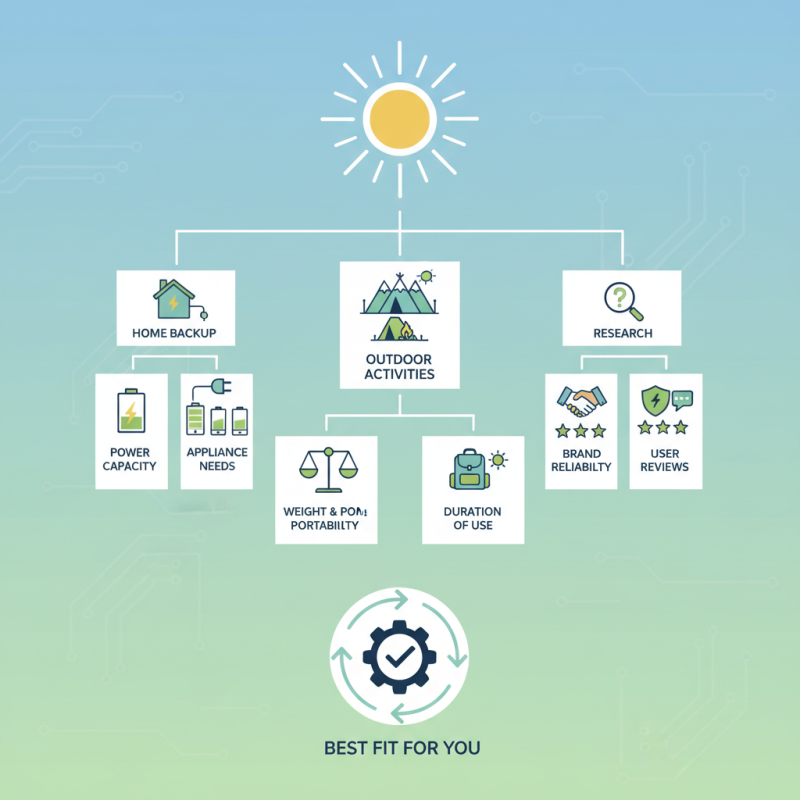
How to Choose the Best Solar Generator for Your Needs?

Understanding Your Power Needs and Usage for Solar Generators

When choosing a solar generator, understanding your power needs is crucial. The U.S. Energy Information Administration reports that the average American household consumes about 877 kWh per month. This translates to about 29 kWh daily. However, your specific power requirements may vary. Identify the devices you intend to power and their wattage to create a more tailored estimate.

Consider the essential appliances and devices you want to run during an outage or while camping. A small refrigerator typically requires around 100-200 watts. Light bulbs, on the other hand, may demand only 10-15 watts each. Adding these together is vital for an accurate assessment. Keep in mind that some devices require more energy when starting up, which can significantly impact your solar generator choice.

Reflecting on your energy usage is also important. It’s possible that your daily power needs fluctuate. Some days may require more electricity due to increased activities. A solar generator with a higher capacity than your average consumption can offer flexibility. Industry studies suggest considering a system that can handle a 20-30% power cushion above your average needs to counter fluctuations. This approach ensures you have ample power during peak demand times.

Key Features to Consider When Selecting a Solar Generator

When selecting a solar generator, certain features are crucial to your decision. The capacity of the generator is paramount. It’s measured in watt-hours (Wh), indicating how much energy it can store and deliver. A report from the National Renewable Energy Laboratory noted that a standard home requires about 10 kWh per day. Therefore, having a generator with roughly 2,000 to 4,000 Wh capacity can be beneficial for short outages.

Battery type plays a significant role too. Lithium-ion batteries are more efficient and longer-lasting compared to lead-acid alternatives. Research indicates lithium-ion batteries can last up to 10 years, while lead-acid typically lasts only 3-5 years. This longevity matters in the long run, particularly for users who depend on reliable power.

Portability is another factor often overlooked. Weigh the ease of transport against your needs. Some models are heavy, making them less ideal for camping or emergency kits. Conversely, lighter models might have lower capacities. Assessing your usage scenario is vital. Consider how often and in what situations you’ll need the generator. Balancing capacity, battery type, and portability is key to finding the right solar generator for you.

Solar Generators Comparison: Key Features

Comparing Different Types of Solar Generators Available

When selecting a solar generator, understanding the different types available is essential. Portable models are popular for camping or short trips. They are lightweight and easy to transport. However, they may not offer enough power for heavy-duty appliances. Evaluate your power needs before making a choice.

Another option is home solar generators. These systems usually have a larger capacity. They can back up essential appliances during outages. However, installation can be complex and requires additional space. Make sure your home can accommodate such systems.

Some generators combine solar panels and batteries. This setup can provide continuous power. Users can charge during the day and use energy at night. But be aware, they often come at a higher price point. Assess your budget and energy requirements when choosing. Each type has its pros and cons. Balance your specific needs with what each model offers.

Evaluating Battery Capacity and Charging Time in Solar Generators

Choosing the right solar generator involves evaluating several factors, prominently its battery capacity and charging time. Battery capacity, measured in watt-hours (Wh), indicates how much energy the generator can store. A higher capacity means more usage time for your devices. For outdoor camping, a generator with at least 500Wh is often recommended. It is essential to assess your energy needs carefully. Will you power small devices only, or do you need to run appliances as well?

Charging time is equally critical. A solar generator with quick charging may seem appealing. However, it’s helpful to balance charging speed with capacity. Generators can take anywhere from a few hours to a full day to charge. In sunny conditions, solar panels tend to work better. It’s essential to guarantee you have enough sunlight for efficient charging.

**Tips for consideration:**
Look for models that allow for solar and AC charging options. This versatility can help adapt to various situations. Monitor your power consumption closely, as overloading your generator can lead to inefficiencies. A generator that works well today may lag in performance tomorrow due to wear and tear. Make every purchase count.

Assessing Portability and Durability for Your Solar Generator Choice

When selecting a solar generator, assessing portability and durability is crucial. Consider where you'll use the generator. Lightweight models are ideal for camping or hiking. They’re easy to carry and fit well in a vehicle. A compact design can also be beneficial for storage. If you struggle with heavier models, think about your physical limitations.

Durability matters too. A generator that can withstand outdoor conditions will serve you better. Look for units made from high-quality materials. They should resist impacts, moisture, and extreme temperatures. Check for user reviews focusing on real-life experiences. These testimonies can reveal how well a unit performs over time.

Don’t overlook the importance of usability. Some models have complicated interfaces. A generator that’s difficult to operate may lead to frustration. Balance ease of use with features you need. Take your time to evaluate your options. Making a thoughtful decision can ensure your solar generator meets your specific needs.

FAQS

: How do I determine my power needs for a solar generator?

: Identify devices you want to power and assess their wattage for an accurate estimate.

What is the average daily power consumption for an American household?

The average is about 29 kWh daily, but this can vary for each household.

How do starting wattages affect my solar generator choice?

Some devices need more power to start. Consider this when calculating your total power needs.

Should I account for fluctuations in my energy usage?

Yes, daily needs can change. A generator with a higher capacity provides flexibility for peak demands.

What is a recommended power cushion for solar generators?

Aim for a system that can handle a 20-30% cushion above your average consumption.

What types of solar generators are available?

There are portable models for camping and larger home systems for backup during outages.

Are portable solar generators powerful enough for heavy-duty appliances?

Typically, no. Evaluate your power requirements before choosing a portable model.

How do solar panel and battery combinations work?

They charge during the day and can provide power at night but are usually pricier.

What should I consider regarding space for home solar generators?

Ensure your home has enough space for installation, as it can be complex.

What’s the most important factor in choosing a solar generator?

Balance your specific power needs with the features of each generator type.

Conclusion

When selecting a solar generator, it's essential to first understand your power needs and how you plan to use the generator. Assessing your electricity requirements will help you determine the appropriate wattage and capacity necessary for your specific applications. Key features to consider include inverter types, number of outlets, and additional functionalities like USB ports, which can greatly enhance usability.

Different types of solar generators are available on the market, catering to various needs. It's important to evaluate battery capacity and charging time to ensure that the generator can reliably meet your demands. Portability and durability are also crucial factors, especially if you plan to use the generator outdoors or for extended periods. By carefully considering these aspects, you can choose the best solar generator that aligns with your lifestyle and energy requirements.

Isabella

Isabella

Isabella is a dedicated marketing professional with a sharp focus on driving brand growth and engagement through strategic content creation. With an extensive background in digital marketing, she combines her passion for storytelling with her keen understanding of industry trends to deliver......